Introduction
Few things are more frustrating than pulling freshly washed clothes out of your washing machine only to discover stains, marks or spots that were not there before. If your washing machine leaves stains on clothes, the problem could be caused by detergent buildup, mold growth, dirty machine components or even mechanical issues.
Fortunately, most of these problems can be identified and fixed before they cause permanent damage to your favorite garments. In this guide, we'll explore the 7 most common reasons your washing machine leaves stains on clothes, how to diagnose each issue, and the best solutions to keep your laundry looking clean and fresh.
Whether you own a top-load or front-load washer, these tips can help extend the life of both your clothes and your appliance.
Why Does a Washing Machine Leave Stains on Clothes?
A washing machine is designed to remove dirt and stains, not create them. However, over time, detergent residue, hard water minerals, mold, rust and worn-out machine parts can transfer unwanted marks onto fabrics.
Understanding the root cause is the first step toward solving the problem effectively.
7 Reasons Your Washing Machine Leaves Stains on Clothes
1. Excess Detergent Buildup
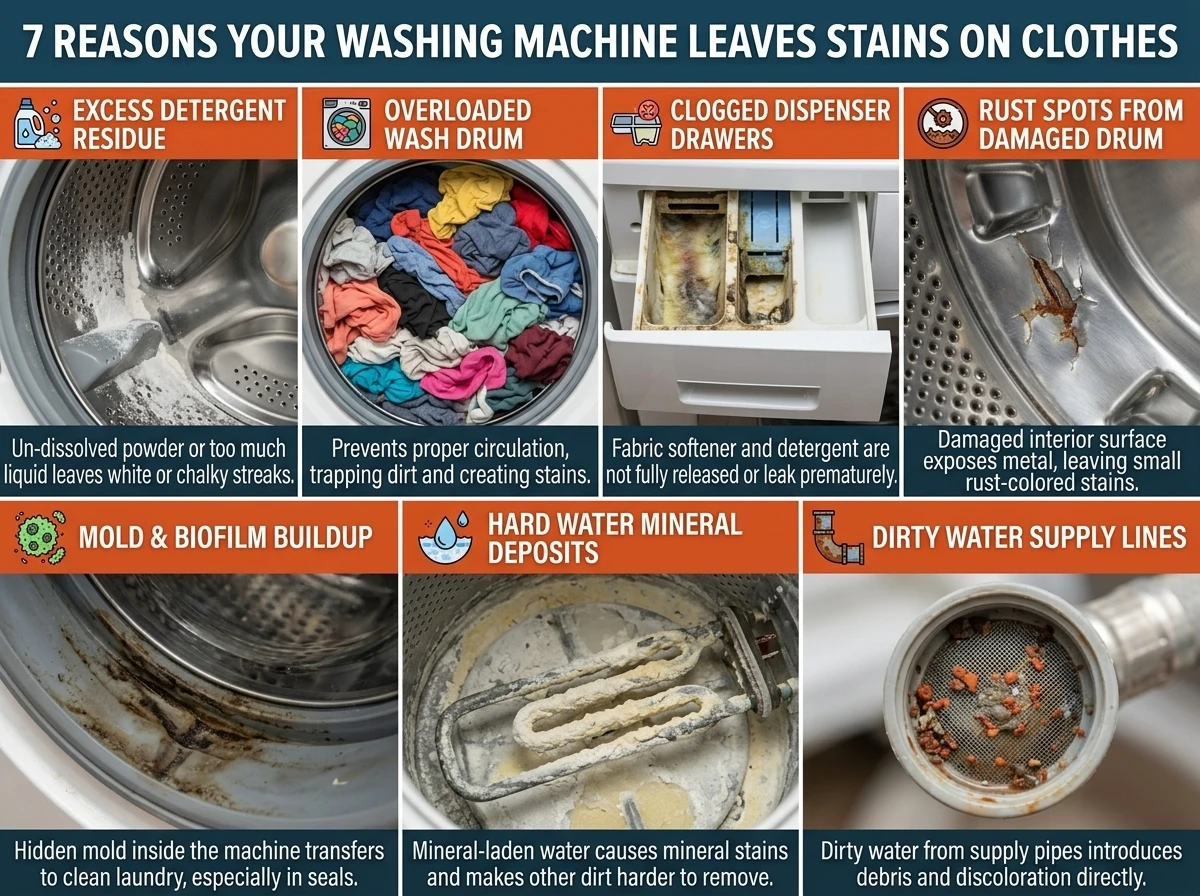
One of the most common causes of stained laundry is using too much detergent.
Many people believe more detergent means cleaner clothes. In reality, excess detergent often fails to rinse away completely and accumulates inside the drum, hoses and detergent drawer.
Signs of Detergent Buildup
White streaks on dark clothing
Sticky residue on fabrics
Musty odor from the washer
Soap scum inside the drum
How to Fix It
Use the recommended detergent amount.
Run an empty hot-water cleaning cycle monthly.
Clean the detergent drawer regularly.
Use HE detergent for high-efficiency washers.
2. Mold and Mildew Growth Inside the Washer
Front-load washing machines are especially prone to mold and mildew growth around the rubber door gasket.
When moisture remains trapped inside the machine, mold develops and can transfer black or gray stains to clothing.
Common Symptoms
Black spots on clothes
Musty smell
Visible mold around door seals
How to Fix It
Leave the washer door open after every wash.
Wipe the rubber gasket weekly.
Run a drum-clean cycle regularly.
Use washing machine cleaner once a month.
3. Dirty Washing Machine Drum
Over time, dirt, lint, body oils and detergent residue can build up inside the drum.
When the buildup becomes excessive, particles can redeposit onto clothes during washing cycles.
Warning Signs
Brown stains on clothing
Dirt particles after washing
Unpleasant odor from the drum
Solution
Run a hot-water cleaning cycle.
Use vinegar or a specialized washer cleaner.
Schedule professional washing machine servicing if buildup persists.
4. Fabric Softener Residue
Fabric softener can leave oily stains when used improperly.
If the dispenser becomes clogged, concentrated softener may directly contact clothes and create greasy-looking spots.
How to Identify It
Blue or oily stains
Waxy marks on fabrics
Softener dispenser overflow
How to Fix It
Dilute fabric softener before use.
Clean the dispenser regularly.
Avoid overfilling the softener compartment.
5. Rust Inside the Washing Machine
Rust can develop in older washing machines due to prolonged exposure to moisture.
Small rust particles can transfer to clothing and create orange, brown or reddish stains.
Signs of Rust Problems
Brown spots appearing after washing
Rust visible inside the drum
Corroded metal components
Solution
Inspect the drum for rust.
Repair damaged drum coatings.
Replace severely rusted components.
Consider professional inspection if rust spreads.
6. Hard Water Mineral Deposits
In areas with hard water, minerals such as calcium and magnesium accumulate inside the machine.
These deposits can combine with detergent and create stains or dull-looking fabrics.
Symptoms
Gray stains on clothes
Stiff fabrics
Reduced cleaning performance
How to Fix It
Use a water softener.
Install a water filtration system.
Perform regular descaling maintenance.
7. Worn-Out Bearings, Seals or Transmission Components
Mechanical issues can sometimes cause oil or grease leaks inside the washing machine.
These leaks may leave dark grease stains that are difficult to remove.
Warning Signs
Black or greasy marks on clothes
Unusual machine noises
Oil underneath the washer
Solution
Stop using the machine immediately.
Contact a professional appliance technician.
Replace damaged components before further use.
How to Prevent Washing Machine Stains on Clothes
Preventive maintenance is the best way to avoid laundry problems.
Best Practices
Clean the washer monthly.
Use the correct detergent amount.
Avoid overloading the machine.
Leave the door open after use.
Clean dispensers regularly.
Inspect the drum for rust.
Schedule professional servicing annually.
When to Call a Professional Washing Machine Technician
If stains continue appearing despite cleaning the machine, there may be an underlying mechanical issue.
Professional technicians can inspect:
Drum condition
Bearings and seals
Water inlet system
Drainage system
Internal detergent buildup
FAQs
1. Why does my washing machine leave brown stains on clothes?
Brown stains are often caused by rust, dirty drum buildup or hard water mineral deposits.
2. Can too much detergent stain clothes?
Yes. Excess detergent can leave residue that appears as white or greasy stains.
3. Why are black marks appearing on my clothes after washing?
Black marks are commonly caused by mold, mildew or deteriorating rubber seals.
4. How often should I clean my washing machine?
A washing machine should be cleaned at least once per month.
5. Can hard water cause washing machine stains?
Yes. Hard water minerals can create gray stains and detergent residue.
6. How do I remove detergent buildup from my washer?
Run a hot cleaning cycle using a washing machine cleaner or vinegar solution.
7. Why does my front-load washer leave stains on clothes?
Front-load washers often develop mold around the door gasket if not cleaned regularly.
8. Can fabric softener cause oily stains?
Yes. Concentrated fabric softener may leave oily spots on clothing.
9. Should I stop using my washer if it leaks oil?
Yes. Oil leaks often indicate serious mechanical issues requiring professional repair.
10. When should I call a washing machine repair technician?
Call a technician if stains persist after cleaning or if you notice rust, oil leaks or unusual noises.
11. Can a dirty washing machine damage clothes permanently?
Yes. Certain stains, especially rust and grease, can become permanent if not treated quickly.
12. Does regular servicing prevent washing machine stains?
Absolutely. Routine maintenance helps prevent buildup, mold and mechanical failures that cause stains.
Conclusion
If your washing machine leaves stains on clothes, the issue is usually caused by detergent buildup, mold, dirty machine parts, hard water, rust or worn-out components. The good news is that most of these problems can be prevented through regular maintenance and proper machine usage.
By identifying the cause early, you can protect your clothes, improve washing performance, and extend the lifespan of your appliance.
The Sajilo Editorial team is made up of our service leads, project managers, and customer experience folks. We write to make home-running less stressful.
See all 173 articles