Introduction
Seepage is one of the most common hidden problems in Nepal homes, especially during monsoon season. Many homeowners only notice the issue after visible damage starts appearing on walls, ceilings or floors. By that time, the seepage may have already weakened parts of the structure and increased repair costs.
Early detection is very important because seepage problems usually begin slowly and spread over time. If ignored, they can lead to mold growth, unhealthy indoor air and long-term structural damage.
In this guide, you will learn the most common warning signs of serious seepage problems and understand when it is time to contact professional waterproofing experts like Sajilo Sewa.
What Is House Seepage?
Definition
Seepage is the slow movement of water through walls, roofs or floors due to cracks, weak waterproofing or drainage problems. Rainwater or moisture gradually enters the structure and creates dampness inside the building.
Unlike sudden leakage from pipes, seepage usually develops slowly and becomes more visible during monsoon season.
Why It Happens
Heavy Monsoon Rain
Nepal experiences heavy rainfall during monsoon season. Continuous exposure to rainwater increases the chances of water entering weak surfaces.
Weak Construction Materials
Low-quality plaster, cement or finishing materials absorb moisture more easily and increase seepage risk.
Poor Waterproofing Layers
Homes without proper waterproofing protection are more vulnerable to rainwater damage.
Wall Cracks and Leakage Points
Small cracks in walls and roofs create entry points for water to slowly penetrate inside the structure.
Warning Signs of Serious Seepage Problems
Damp or Wet Walls
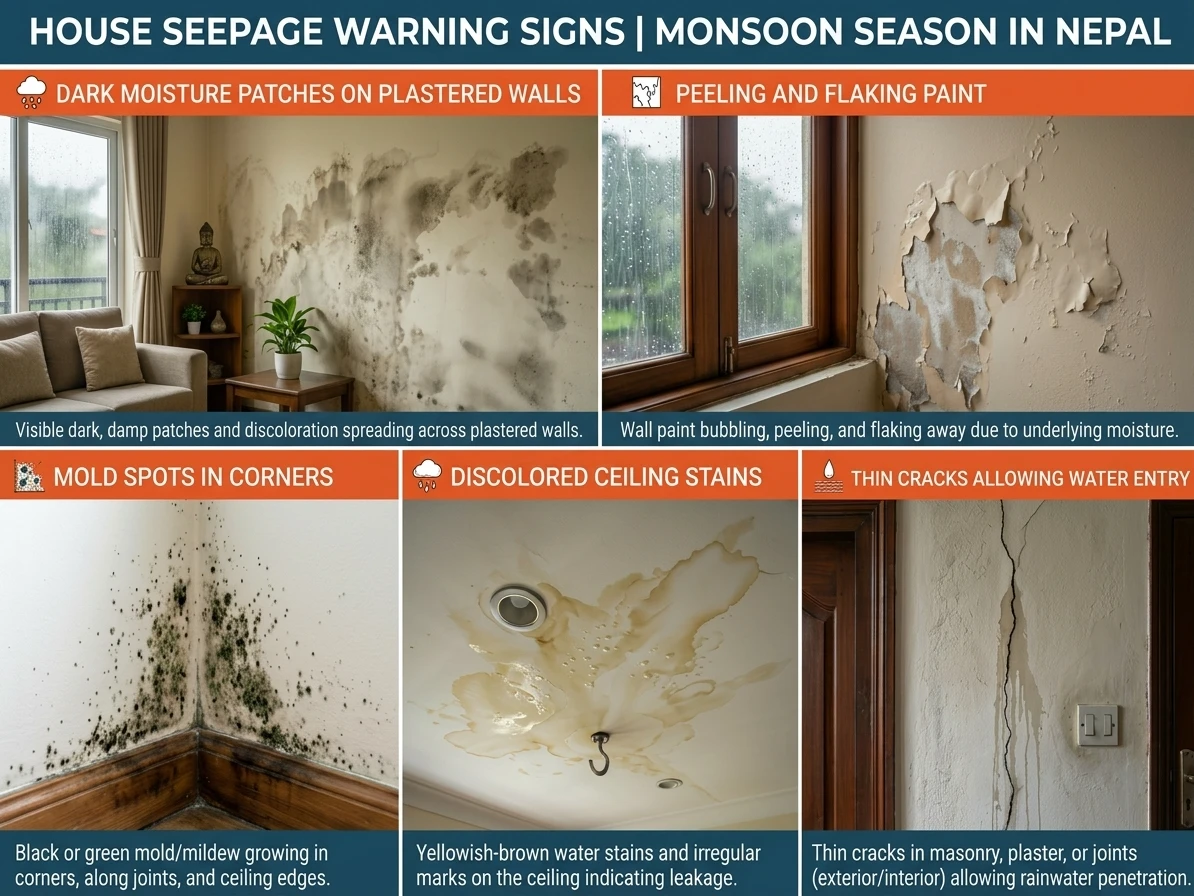
One of the first warning signs of seepage is dampness on walls. You may notice dark patches, wet surfaces or cold moisture on the wall during or after rainfall.
If the walls stay wet for a long time even after rain stops, it usually indicates hidden seepage inside the structure.
Peeling or Bubbling Paint
When moisture gets trapped inside walls, the paint loses adhesion and starts bubbling, cracking or peeling off.
Many homeowners repaint the wall temporarily, but unless the seepage problem is fixed, the damage usually returns again.
Mold and Fungus Growth
Black or Green Spots on Walls
Mold and fungus commonly appear in areas with constant moisture and poor ventilation. These dark patches usually spread quickly during monsoon.
Health Risk Warning
Mold growth can affect indoor air quality and may cause allergies, coughing, breathing problems and skin irritation, especially for children and elderly family members.
Musty or Bad Smell Indoors
A damp or musty smell inside rooms is often a sign of hidden moisture buildup. This smell becomes stronger in humid weather and indicates that water may already be trapped inside walls or ceilings.
Water Stains on Walls and Ceiling
Yellow, brown, or dark stains on walls and ceilings are signs of long-term water seepage. These stains usually appear when moisture spreads internally through plaster and concrete surfaces.
Cracks in Walls or Roof
Small Hairline Cracks
Even small cracks can allow rainwater to slowly enter inside the structure during monsoon season.
Deep Structural Cracks
Larger cracks may indicate serious waterproofing failure or structural weakness that requires immediate professional inspection.
Weak or Soft Wall Surface
Walls affected by seepage often feel soft, swollen or weak when touched. In severe cases, plaster may start crumbling or falling apart due to continuous moisture absorption.
Ceiling Leakage During Rain
Water dripping from the ceiling during rainfall is a major warning sign of serious seepage or roof waterproofing failure. Ignoring roof leakage can quickly damage electrical systems, paint, furniture and ceiling structure.
Causes of Serious Seepage in Nepal Homes
Poor Waterproofing During Construction
Many older homes in Nepal were built without proper waterproofing treatment. Over time, rainwater slowly penetrates these weak surfaces.
Blocked Roof Drainage
When roof drains become blocked by dirt or debris, rainwater starts collecting on the roof and increases pressure on weak areas.
External Wall Damage
Exterior walls constantly exposed to rain without protective coating absorb moisture easily and develop seepage problems.
Old Building Structure
Older homes often develop weakened plaster, cracked surfaces and damaged waterproof layers, increasing the risk of water penetration.
When You Should Take Immediate Action
Continuous Dampness
If damp patches remain visible for several days after rainfall, professional inspection is recommended.
Visible Mold Spread
Rapid mold growth inside rooms may indicate severe moisture buildup behind walls.
Water Leakage Inside House
Active dripping, ceiling leakage or water entering rooms during rain should never be ignored.
Why Seepage Should Not Be Ignored
Structural Damage Risk
Long-term seepage weakens walls, ceilings and concrete structures, reducing overall building durability.
Health Problems
Moisture and mold buildup can create unhealthy indoor conditions and increase respiratory problems.
Expensive Repairs Later
Ignoring seepage in the early stage often leads to larger repair costs in the future due to widespread damage.
Professional Seepage Solutions in Nepal
Sajilo Sewa provides expert solutions including:
Waterproofing Services
Professional roof, wall and basement waterproofing solutions for long-term monsoon protection.
Crack Repair Treatment
Structural cracks are sealed using professional waterproof materials and repair methods.
Anti-Moisture Coating
Special protective coatings help reduce rainwater absorption and wall dampness.
Home Inspection Service
Professional inspection helps identify hidden seepage sources before major damage occurs.
Why Choose Sajilo Sewa?
Skilled Technicians
Experienced waterproofing professionals trained to handle seepage and leakage problems efficiently.
Home Service Available
Convenient on-site inspection and repair services across Nepal.
Affordable Pricing
Cost-effective waterproofing and repair solutions for homes and buildings.
Fast Response
Quick service support during monsoon emergencies and urgent leakage situations.
FAQs
What is the first sign of seepage in a house?
Damp or wet walls that remain moist after rain are usually the earliest signs of seepage.
Is seepage dangerous for a house?
Yes. Long-term seepage can weaken walls, ceilings, plaster and the overall building structure.
Can seepage cause health problems?
Yes. Mold and moisture caused by seepage may trigger allergies, breathing issues and poor indoor air quality.
What causes seepage in Nepal homes?
Poor waterproofing, heavy monsoon rainfall, wall cracks and drainage problems are the most common causes.
Can seepage be fixed permanently?
Yes. Professional waterproofing and proper structural repair can provide long-term seepage protection.
When should I call a technician?
You should contact a technician if dampness, leakage, mold growth or wall damage continues increasing.
Does Sajilo Sewa provide seepage repair?
Yes. Sajilo Sewa provides professional waterproofing, seepage repair and home maintenance services across Nepal.
Final Thoughts
Seepage problems usually start small but can become serious if ignored for too long. Early warning signs like damp walls, mold growth, peeling paint and ceiling leakage should never be overlooked.
Taking action at the right time can help prevent expensive structural damage and maintain a healthier living environment. If you notice any seepage symptoms in your home, professional inspection and waterproofing are highly recommended.
The Sajilo Editorial team is made up of our service leads, project managers, and customer experience folks. We write to make home-running less stressful.
See all 173 articles