Introduction
Waterproofing is one of the most important steps to protect homes in Nepal, especially during heavy monsoon seasons. Continuous rain, poor construction quality, and wall cracks often lead to seepage, dampness and structural damage.
In 2026, modern waterproofing techniques have become more advanced, durable, and cost-effective. This guide will help you understand everything about home waterproofing in Nepal, including methods, materials and professional solutions offered by experts like Sajilo Sewa.
What Is Home Waterproofing?
Definition
Home waterproofing is the process of protecting a building from water penetration through walls, roofs, basements and floors. It creates an impermeable barrier that prevents water from passing through structural elements into the living spaces of a house.
Why It Is Important in Nepal
Heavy monsoon rainfall: Nepal experiences intense precipitation over several consecutive months, putting immense hydrostatic pressure on residential structures.
Humid climate conditions: High humidity prevents trapped moisture from evaporating naturally, leading to internal rot.
Old construction structures: Many houses rely on traditional, porous bricks and concrete mixtures lacking modern water-resistant additives.
Weak drainage systems: Poorly planned municipal or residential drainage causes water to pool around foundations and rooftops, worsening infiltration.
Common Water Leakage Problems in Nepal Homes
Wall Seepage
Moisture enters through external walls due to hairline cracks, porous brickwork or degraded external plaster, which eventually ruins interior paint and wallpaper.
Roof Leakage
Water pools on flat concrete rooftops during heavy downpours. Over time, micro-cracks expand, allowing rainwater to drip through ceilings and damage electronics or furniture.
Bathroom Leakage
Poor tile grouting and degraded plumbing seals in wet areas cause water to seep downward, creating damp patches on the ceilings of rooms directly below.
Basement Dampness
Groundwater exerts constant pressure against underground walls. Without proper vertical barriers, moisture penetrates structural concrete, causing musty odors and structural weakening.
Types of Waterproofing Methods (2026)
Cementitious Waterproofing
This method utilizes polymer-modified cement mixtures to create a rigid or semi-flexible moisture barrier.
Where It Is Used
Bathrooms and toilets
Underground and overhead water tanks
Small balcony and roof areas
Benefits
Highly affordable compared to synthetic membranes
Easy mixing and seamless application
Provides excellent bond strength to concrete substrates
Liquid Waterproofing Membrane
A liquid coating (often polyurethane or acrylic-based) is sprayed or rolled onto surfaces, curing into a joint-free, rubber-like elastic wrapper.
Where It Is Used
External facades and walls exposed to driving rain
Large rooftop surfaces
Benefits
High flexibility (stretches to bridge moving cracks)
Provides long-lasting, decades-long protection
Strongly UV and weather resistant
Bituminous Waterproofing
This classic approach involves asphalt-based coatings or pre-formed torch-on membranes to form an absolute shield against heavy water loads.
Where It Is Used
Flat roof slabs and terrace decks
Retaining basement walls
Benefits
Creates an exceptionally tough, thick water barrier
Ideally suited for geography with intense, heavy rain loads
Injection Grouting
Low-viscosity polyurethane or epoxy resins are injected directly into structural faults under high pressure to seal leaks from the inside out.
Where It Is Used
Deep concrete cracks and honeycombs
Active, high-pressure structural seepage areas
Benefits
Effectively repairs internal, invisible structural damage
Provides a definitive, permanent long-term solution
Signs Your Home Needs Waterproofing
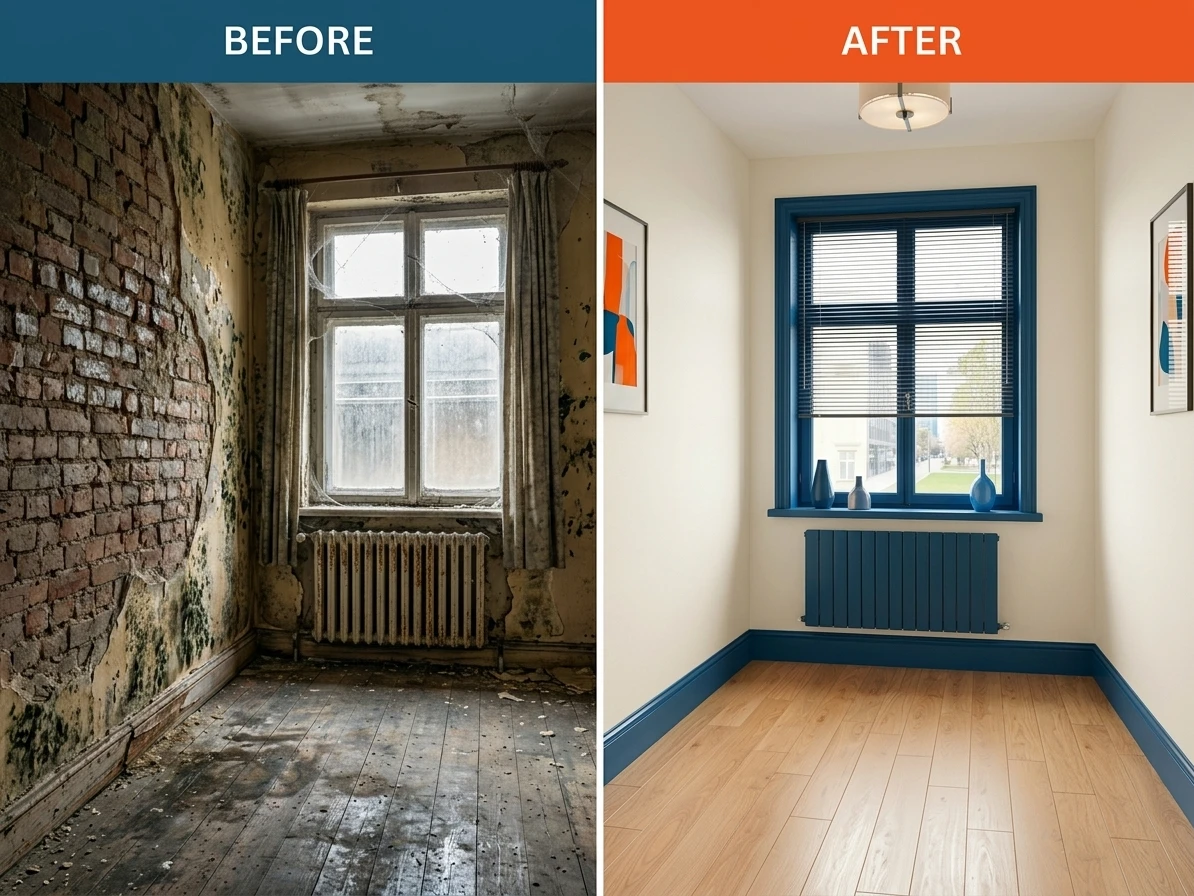
Damp Walls
Walls remain wet to the touch, cold, or discolored even days after the monsoon rain has completely stopped.
Peeling Paint
Interior wall paint starts bubbling, blistering, flaking, or falling off in powder form due to underlying moisture pressure.
Mold Growth
The sudden appearance of black, green or white fuzzy fungus patches on walls, corners or inside closets, presenting respiratory health risks.
Water Stains
Ugly yellow, brown or rusty rings spread across ceilings or upper wall borders, indicating active overhead leakage.
Roof Leakage
Visible water dripping, pooling or sweating from the concrete ceiling slab during or right after rain showers.
Step-by-Step Waterproofing Process (Professional)
Step 1 – Inspection
Technicians conduct a physical assessment, sometimes utilizing moisture meters, to trace the exact root causes and entry points of water.
Step 2 – Surface Cleaning
The substrate is thoroughly scrubbed to remove loose dust, old paint, algae, oils and weak plaster using wire brushes or high-pressure water jets.
Step 3 – Crack Filling
All visible structural cracks and gaps are widened into a V-groove and sealed using specialized polymer-modified mortars or polyurethane sealants.
Step 4 – Waterproof Coating
Technicians apply multiple primer and chemical topcoats (cementitious, liquid or membrane systems) ensuring uniform thickness across the treated area.
Step 5 – Final Testing
Rooftops or wet areas undergo a ponding test (flooding the area for 24-48 hours) to verify total water resistance before handing over the project.
Benefits of Waterproofing Your Home
Long-Term Protection
Eliminates recurrent water infiltration issues, keeping your interiors dry and structurally sound for decades.
Strong Structure
Prevents concrete carbonation and rust formation on internal steel rebars, preserving the load-bearing integrity of your building.
Health Safety
Drastically reduces interior relative humidity, stopping the multiplication of toxic mold and dust mites that trigger allergies and asthma.
Cost Savings
Saves homeowners from the compounding expenses of annual repainting, plastering patches and emergency plumbing overhauls.
Waterproofing Cost in Nepal (2026 Overview)
Factors Affecting Cost
Area size: Total square footage of the treatment area (roofs vs. single bathrooms).
Damage level: Minor surface dampness vs. deep structural concrete cracks requiring extensive grouting.
Material type: Standard cementitious coatings vs. high-end polyurethane flexible liquid membranes.
Labor charges: Accessibility of the site and the technical precision required for the application.
General Estimate
Costs vary depending on inspection and service requirements. Because material formulations and application scales differ drastically per household, a tailored on-site inspection is required for a binding budget quote.
Why Choose Professional Waterproofing Services?
Expert Diagnosis
DIY methods only mask the surface. Professionals pinpoint hidden seepage paths utilizing advanced industry knowledge.
High-Quality Materials
Access to industrial-grade polymers, genuine chemical membranes and specialized sealants not readily available in local hardware stores.
Proper Application
Ensures critical mixing ratios, drying intervals between coats and precision corner-detailing are executed flawlessly.
Guaranteed Results
Saves you time and provides peace of mind via systematic execution, drastically reducing the chances of any future leakage.
Sajilo Sewa Waterproofing Services in Nepal
Sajilo Sewa provides complete home solutions including:
Wall Waterproofing
Comprehensive exterior and interior treatment coats to counter driving rain and rising capillary moisture.
Roof Waterproofing
Seamless membrane installations that transform flat terraces into completely leak-proof zones ready for monsoon downpours.
Crack Repair Services
Structural integrity restoration using high-pressure resin injections and fiber-reinforced joint sealers.
Home Inspection Services
Advanced dampness analysis to identify early-stage vulnerabilities before they evolve into costly structural repairs.
FAQs
What is waterproofing in a house?
Waterproofing is a protective engineering process that seals surfaces using impermeable materials to stop external or internal water from entering walls, roofs, and floors.
Why is waterproofing important in Nepal?
Nepal's prolonged, intense monsoon season combined with high humidity makes homes highly susceptible to concrete degradation, paint peeling, and structural weakening if left unprotected.
How long does waterproofing last?
Depending on the quality of the materials selected (e.g., acrylic vs. polyurethane) and professional maintenance, high-quality waterproofing systems can reliably last anywhere from 5 to over 15 years.
What is the best waterproofing method?
There is no single best method; liquid membranes are premium choices for expansive, exposed roofs, while cementitious coatings are optimal for indoor wet areas like bathrooms and water tanks.
Can waterproofing stop seepage permanently?
Yes. When executed by licensed professionals who treat the structural root cause of the leak rather than just covering up the damp stain, waterproofing offers a permanent fix.
When should I waterproof my house?
The ideal window is during the dry pre-monsoon months (late autumn to spring) when surfaces are perfectly dry, allowing chemicals to bond and cure properly to the concrete.
Does Sajilo Sewa provide waterproofing service in Nepal?
Yes, Sajilo Sewa provides comprehensive, professional waterproofing, structural dampness assessments, and home repair services managed by skilled technicians across Nepal.
Final Thoughts
Waterproofing is not just a repair work—it is a long-term investment for your home safety. In Nepal’s monsoon conditions, proper waterproofing ensures protection from seepage, mold, and structural damage.
If you notice early signs of leakage or dampness, it is best to take action immediately. Professional services like Sajilo Sewa can help protect your home with reliable waterproofing and repair solutions.
The Sajilo Editorial team is made up of our service leads, project managers, and customer experience folks. We write to make home-running less stressful.
See all 173 articles